Introduction
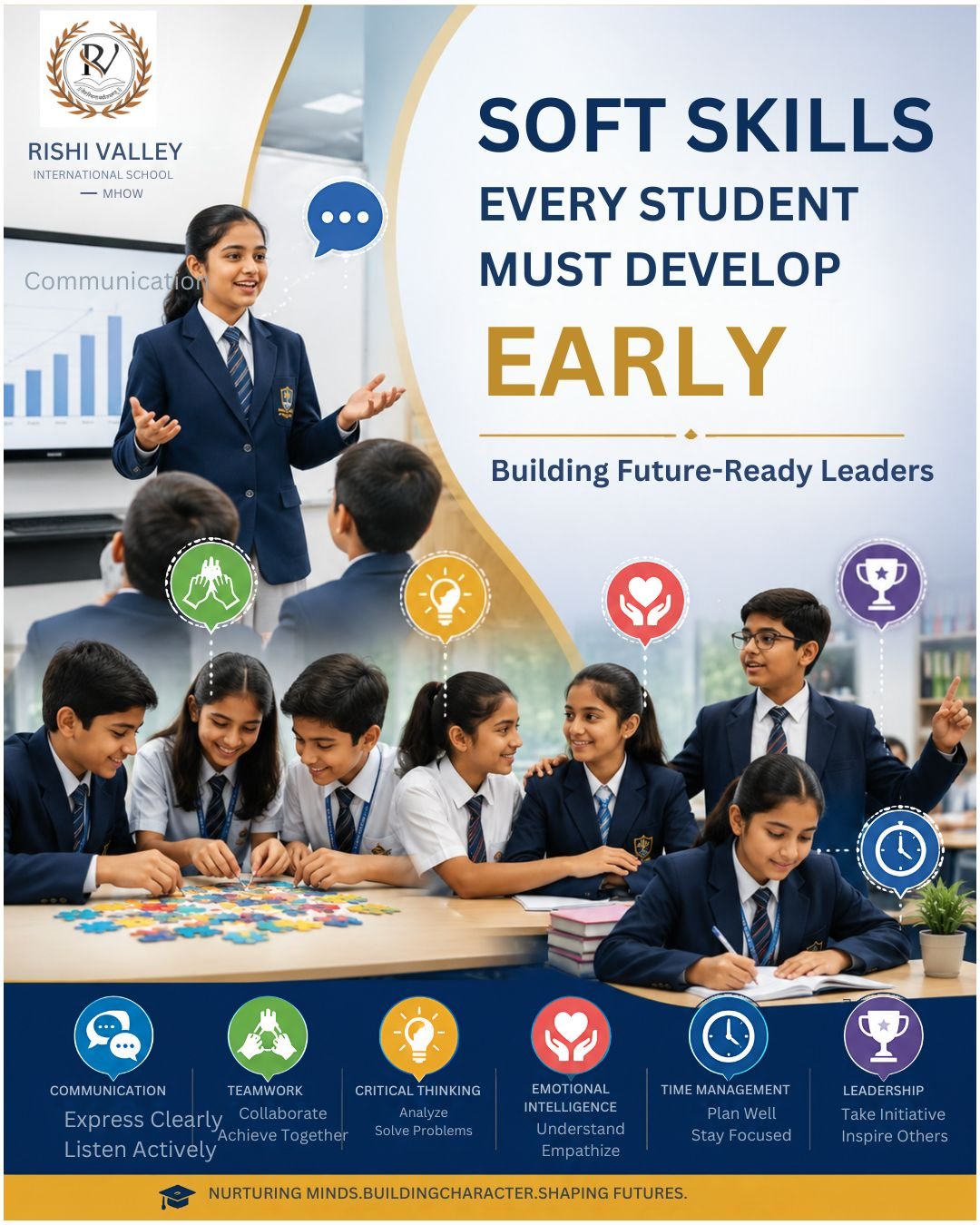
In today’s rapidly changing world, academic knowledge alone is not enough to guarantee success. While strong grades remain important, employers and universities increasingly value interpersonal abilities, adaptability, and communication skills. Therefore, understanding the soft skills every student must develop early has become essential for parents, educators, and students alike.
At Rishi Valley International School, Mhow, we believe that education goes beyond textbooks. Our goal is to help students become confident, responsible, and future-ready individuals by developing crucial life skills from an early age.
What Are Soft Skills?
Soft skills are personal qualities and interpersonal abilities that help individuals communicate effectively, work well with others, and navigate challenges successfully. Unlike technical or academic skills, soft skills influence how students interact, learn, and grow throughout their lives.
Moreover, these skills play a significant role in building strong relationships, improving academic performance, and preparing students for future careers.
Why Should Students Develop Soft Skills Early?
Children who develop soft skills at a young age often become more confident, adaptable, and resilient. Furthermore, early exposure to these skills helps students handle academic pressure, collaborate with peers, and make informed decisions.
Some major benefits include:
- Improved communication and social interactions
- Better teamwork and leadership abilities
- Enhanced problem-solving skills
- Greater emotional intelligence
- Increased self-confidence
- Stronger adaptability to change
As a result, students are better prepared for both educational and professional success.
Essential Soft Skills Every Student Must Develop Early
1. Communication Skills
Effective communication is one of the most valuable life skills. Students should learn how to express their thoughts clearly, listen actively, and engage respectfully in conversations.
Strong communication skills help children:
- Participate confidently in class discussions
- Build healthy relationships
- Present ideas effectively
- Resolve misunderstandings constructively
2. Teamwork and Collaboration
Modern workplaces and educational environments emphasize collaboration. Consequently, students must learn how to work effectively with diverse groups of people.
Teamwork teaches children:
- Cooperation
- Respect for different opinions
- Shared responsibility
- Conflict resolution
Group projects, sports, and extracurricular activities provide excellent opportunities to strengthen collaborative abilities.
3. Critical Thinking and Problem-Solving
Students encounter challenges every day. Therefore, learning how to analyze situations, evaluate options, and make informed decisions is crucial.
Critical thinking enables students to:
- Approach problems logically
- Think independently
- Make better decisions
- Develop creativity and innovation
4. Emotional Intelligence
Emotional intelligence involves understanding and managing emotions while recognizing the feelings of others. In addition, emotionally intelligent students tend to perform better academically and socially.
Key components include:
- Self-awareness
- Empathy
- Self-regulation
- Social awareness
These qualities help students build meaningful relationships and handle challenges effectively.
5. Adaptability and Flexibility
The future will continue to evolve with new technologies and opportunities. As a result, students must become comfortable with change and uncertainty.
Adaptable students:
- Learn new skills quickly
- Embrace challenges
- Remain positive during transitions
- Adjust to different situations effectively
6. Leadership Skills
Leadership is not limited to managing others. Instead, it involves taking initiative, accepting responsibility, and inspiring positive action.
Students can develop leadership by:
- Participating in school clubs
- Leading team projects
- Volunteering for responsibilities
- Mentoring younger peers
7. Time Management
Good time management helps students balance academics, extracurricular activities, and personal responsibilities.
Students who manage time effectively often:
- Meet deadlines consistently
- Reduce stress levels
- Improve productivity
- Achieve academic goals more efficiently
How Schools Can Foster Soft Skills Development
Schools play a vital role in nurturing these abilities. Through interactive learning experiences, collaborative projects, sports, cultural activities, and leadership opportunities, students gain practical exposure to essential life skills.
At Rishi Valley International School, Mhow, we integrate soft skill development into everyday learning experiences. Our holistic approach encourages students to communicate confidently, think critically, collaborate effectively, and become responsible global citizens.
Conclusion
Developing soft skills every student must develop early is just as important as academic achievement. Communication, teamwork, emotional intelligence, leadership, adaptability, and problem-solving abilities empower students to thrive in school and beyond.
By focusing on these essential skills from a young age, schools and parents can help children build a strong foundation for lifelong success. At Rishi Valley International School, Mhow, we are committed to shaping well-rounded individuals who are prepared to excel in an ever-changing world.
Frequently Asked Questions (FAQs)
1. What are the most important soft skills for students?
The most important soft skills include communication, teamwork, leadership, emotional intelligence, adaptability, critical thinking, and time management.
2. Why are soft skills important for students?
Soft skills help students build confidence, improve relationships, perform better academically, and prepare for future career opportunities.
3. At what age should students start developing soft skills?
Students can begin developing soft skills from early childhood through classroom activities, social interactions, sports, and family engagement.
4. How can schools help students improve soft skills?
Schools can encourage soft skill development through group projects, leadership programs, extracurricular activities, public speaking opportunities, and collaborative learning experiences.
5. How does Rishi Valley International School, Mhow support soft skill development?
Rishi Valley International School, Mhow promotes holistic education through interactive learning, teamwork activities, leadership opportunities, and character-building programs that prepare students for future success.